Is my data sent anywhere?
Your research data, no. It stays in ~/.scholardo/ on your machine — no telemetry, no usage data, no cloud sync. The only calls we make on our own are the license check and, on this site, a version lookup; features you trigger yourself (an AI provider, an RSS feed, opening a page) reach out to whatever you pointed them at. The privacy policy lists all of it.
Do I need an AI API key to use it?
No. Core features — search, annotations, citations, browser capture — work locally without any key. A key is only needed for AI-powered features like selection rewriting or feed digests. You can also route different kinds of task to different providers and models, or point everything at a local Ollama model.
How do I know the AI got the citations right?
Before you export, 18 local rules check the chain from each claim back to its source: a [@key] that resolves to nothing, a page number past the end of the file you cited, a quotation or a figure with no source, and a reference you cited but never opened. Running them needs no network and no model — nothing leaves your machine. A document that fails can still be exported, and the waiver is recorded along with which checks did not run.
How is this different from Zotero?
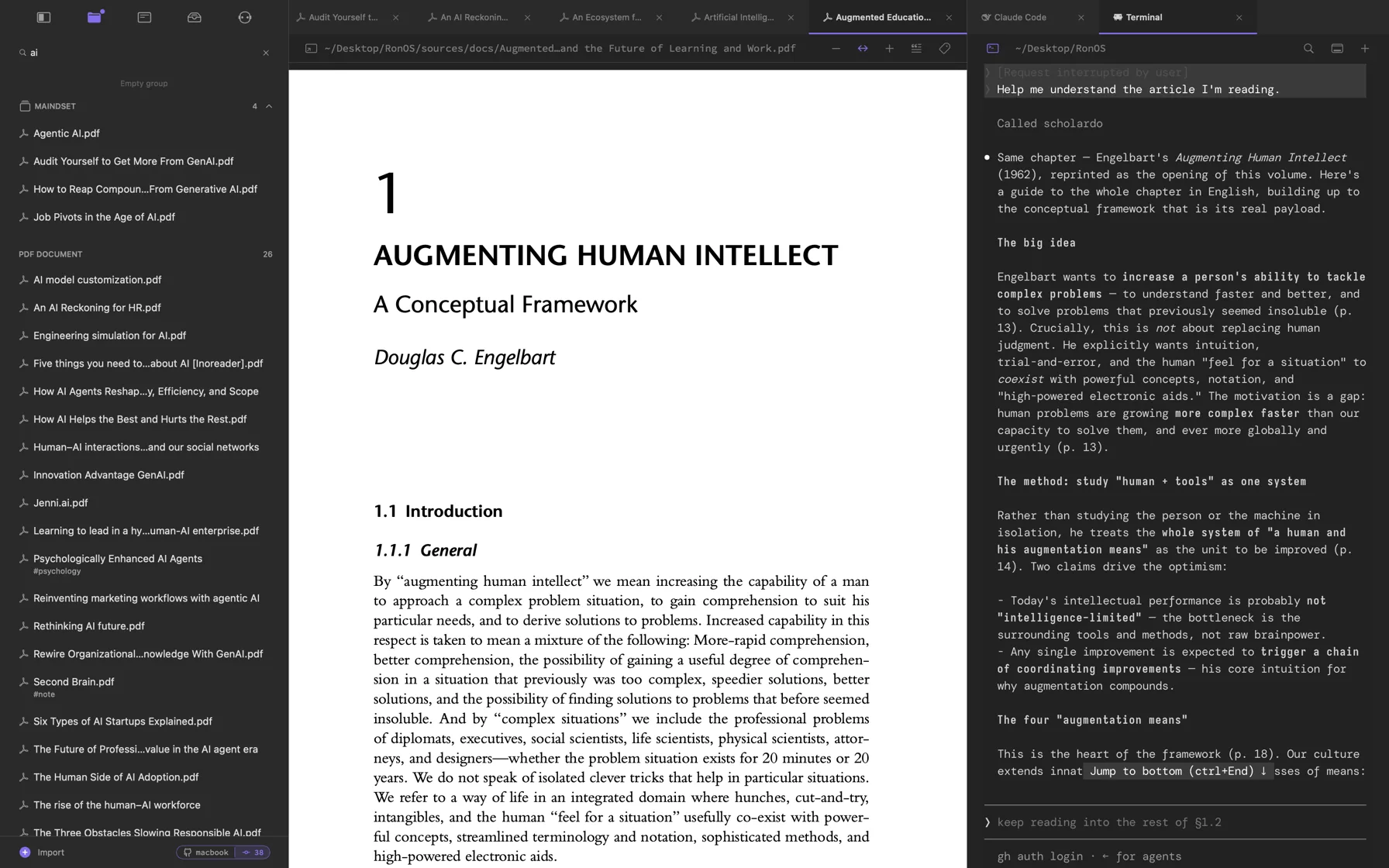
Zotero is built for one researcher. Scholardo is built for two: you and your agent share the same library, the same annotations, and live reading context — natively, not through a plugin.
Zotero has community MCP plugins — how is this different?
Those let an agent read your references. Scholardo lets one work inside your whole research: not just papers and metadata, but your highlights, your notes, your drafts, and whatever you have open right now. The difference is not whether an agent can reach the library — it is how much of your work the library holds.
Why macOS only?
Agent CLIs live in a terminal, and this is where that terminal is — we follow the agents rather than the platform count. Being native is also what lets Finder tags sync both ways and lets the app reach your files without a sync layer in between. There is no iOS, Windows, Linux or web version, and none is planned.
Does it work without internet?
Almost entirely. Local search, annotations, citations, and terminal sessions all work offline. Exceptions: fetching web content, cloud-model embedding / AI calls if configured, and the annual license refresh. If you switch to local open-source models via Ollama, embedding and AI generation run on your own machine — so semantic search, selection rewriting, and more also work fully offline, unlocking even more without a connection.
What's the license model?
Personal licenses come in two forms: Annual ($49.99/yr, cancel anytime) and Lifetime ($199.99, pay once). Both are Founding Researcher prices, held through September 30, 2026 and rising as the roadmap lands — a subscription started during the program keeps its rate for as long as it runs without a gap, and whatever you have paid in subscription comes off the lifetime price if you switch. Download the app and unlock it with a license key. Team pricing is available on request.
Where does the invoice come from?
From the merchant of record that took the payment, not from us. Buy through Stripe and the receipt and invoice PDFs arrive attached to the confirmation email; buy through Creem — the route for mainland China — and you download them from the order page linked in its order email. Either way they show the amount, the tax and the order number. One caveat that only affects mainland China: it is a commercial invoice from a non-Chinese entity rather than a Chinese VAT invoice, and checkout has no field for a Chinese company name or tax number. Get in touch if your finance department needs supporting paperwork.
How many Macs can one license activate?
Up to 3. A fourth activation is refused until a seat is freed — open Scholardo → About on the Mac you want to release and choose “Deactivate this device”. The seat frees up immediately, and that Mac can be activated again later.
Do I need to use a terminal?
No. An agent is built into the app — choose a model and start; it can do everything a CLI can do with your library. If you would rather use the Claude Code or Codex you already pay for, that works too, from a shell session.